New Prince Shri Bhavani College of Engineering and Technology

Santhosapuram, Chennai
044 – 22780404
91526 66333 | 91526 66444
B.E. ELECTRICAL AND ELECTRONICS ENGINEERING

ELECTRICAL AND ELECTRONICS ENGINEERING

Established in 2008, the Department of Electrical and Electronics Engineering (EEE) has built a strong reputation for academic excellence, supported by a team of highly qualified and experienced faculty. With exceptional infrastructure, the department emphasizes sound practical knowledge while fostering creativity and innovation among its students.

The department addresses the challenges and opportunities of Electrical, Electronics, Computer, and Control Systems industries, equipping students with the scientific, technological, and problem-solving skills required to design, construct, and maintain products, services, and information systems. The program prepares graduates for diverse career roles such as Design Engineer, Project Engineer, Engineering Specialist, Chief Engineer, Quality Control Engineer, Software Engineer, Development Engineer, Reliability Engineer, Research Engineer, Systems Design Engineer, Field Engineer, Test Engineer, and Sales Engineer. Moreover, Electrical Engineering serves as a foundation for careers in Instrumentation Engineering, Energy Engineering, Computer Science, Biomedical Engineering, and Aerospace Engineering.

Research and innovation form a cornerstone of the department’s functioning. In the past two years, faculty members have published more than 25 journal papers, reflecting the vibrant academic culture. Both faculty and students actively engage in research through the Project Lab, Industry-Supported Lab, and Research Lab, with opportunities to publish in refereed journals and conferences.

Students benefit from training programs offered by reputed industries, professional societies, research organizations, and academic institutions. The department also strategically promotes industry interaction with leading Electrical and Electronics companies, creating pathways for internships, collaborative projects, and enhanced career opportunities.

The department has established strong industry linkages by signing MoUs with leading organizations such as Retech Solutions Pvt. Ltd., Tessolve Semiconductors Ltd., Goodwin Motors, and eDGIM Research Pvt. Ltd. These collaborations facilitate industry-relevant R&D projects and internships, providing students with valuable real-world exposure.

Faculty and students are actively engaged in innovative, sponsored research initiatives, with major projects submitted for funding to prestigious government bodies including AICTE, DST-SERB, and MNRE. The department’s commitment to research excellence is further reflected in the significant number of patents filed by faculty members, showcasing their expertise and contributions to emerging technologies.

Looking ahead, the department aims to leverage these experiences to strengthen collaborative research with industry partners and to enhance student outcomes through a holistic approach that integrates teaching, research, development, and training in cutting-edge technologies.
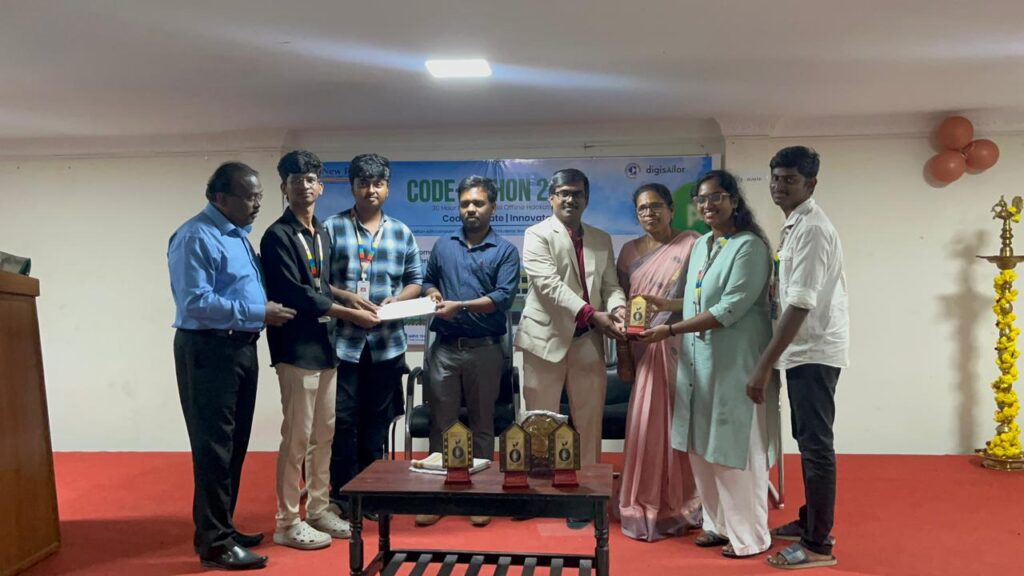
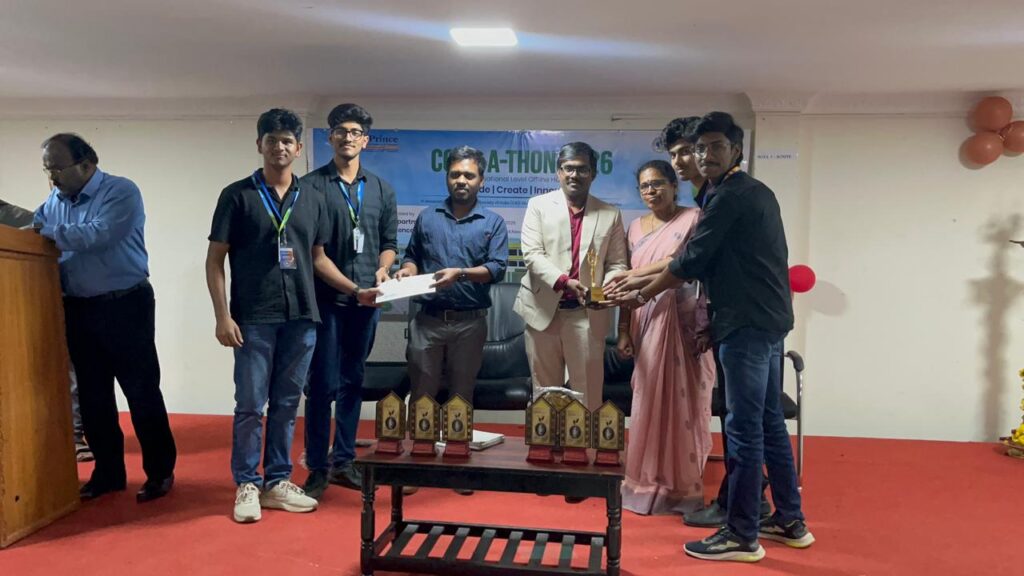
Code Athon

Awareness Program

GUVI

Message from the Head of the Department


The Department of EEE is committed to providing high-quality technical education and nurturing competent electrical engineers to meet the evolving demands of industry and society. Our department offers a strong academic foundation combined with practical exposure in the areas of power systems, electrical machines, control systems, power electronics, renewable energy, and emerging technologies.
We are supported by a team of highly qualified, experienced, and dedicated faculty members who are actively involved in teaching, research, training, and mentoring students. The department is well equipped with modern laboratories, advanced software tools, and learning resources that enable students to gain hands-on experience and industry-relevant skills.

To enhance overall student development, the department regularly organizes workshops, industrial visits, guest lectures by industry experts, value-added courses, technical symposiums, and training programs. Emphasis is given to project-based learning, innovation, research activities, and entrepreneurship. Our students are encouraged to participate in co-curricular and extracurricular activities, professional bodies, and community-oriented programs.

The department focuses on achieving excellent academic results, placements, and higher education opportunities by fostering critical thinking, ethical values, teamwork, and leadership qualities. We strive to create a learner-centric environment that motivates students to become responsible engineers and lifelong learners.

I warmly invite students, parents, alumni, and industry partners to explore our department and join us in our mission to achieve academic excellence and professional success.

Dr. R.Venkatasubramanian

Professor & Head of the Department,

Electrical and Electronics Engineering,

New Prince Shri Bhavani College of Engineering & Technology.

INDUSTRIAL VISIT

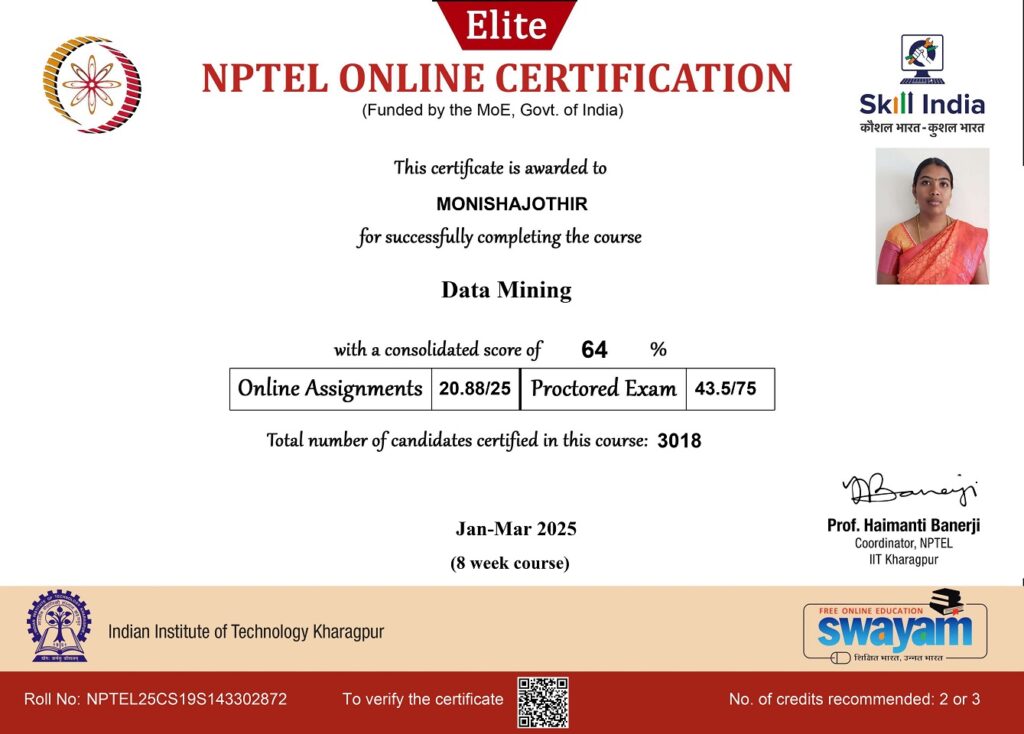
NPTEL Elite

Kochi

Program Outcomes: (POs)

Engineering Graduates will be able to:

PEO1 :   Engineering Knowledge: An ability to apply knowledge of mathematics, science and engineering in mechanical field.

PEO2 :  Problem Analysis: An ability to design and conduct experiments, as well as to analyze and interpret data with acquired knowledge.

PEO3 : Design/development of solution: An ability to design a system, component or process to meet the desired needs within realistic constraints such as economic, environmental, social, ethical, health, safety, manufacturability and sustainability.

PEO4 : Conduct investigations of complex problems: An ability to function on multidisciplinary teams with potential will power.

PEO5 :  Modern tool usage: An ability to identify, formulate and solve engineering problems.

PEO6 :  The Engineer and Society: An understanding of professional and ethical responsibility in society.

PEO7 :  Environment and Sustainability: An ability to communicate effectively and interactively with different people.

PEO8 :  Ethics: An a ability to understand the impact of engineering solutions in global, economic, environmental and societal context.

PEO9 :  Individual and team work: Recognition of the need for and an ability to engage in lifelong learning.

PEO10 : Communication: An ability to use the techniques, skills and modern engineering tools necessary for Engineering practice in their field of application.

PEO11 : Project Management and Finance: To enhance the Industry-Institute inter-relationship through various design and fabrication projects, which are useful to the industry.

PEO12: Life-long Learning: To encourage the entrepreneurship goals through the curriculum and practical based projects and comprehension courses.


PROGRAM EDUCATIONAL OBJECTIVES (PEOs):

PO 1 : Procure optimum solution for electrical engineering problems in order to cater successful  professional career

PO 2 : Demonstarte creativity in the engineering practices including entrepreneurial and collaborative ventures with strategic thinking planning and execution for lifelong learning.

.

PO3 : Exhibit to communicate effectively, recognize and incorporate societal needs and constraints in their professional endeavours and practice the profession with high regard to legal and ethical responsibilities

PROGRAM SPECIFIC OBJECTIVES (PSOs):

Students of the Electronics and Communication Engineering Program:

PSO1 : Shall  have  Potential  to  analyze,  design,  synthesize  and  provide  technical  solutions  in the field of VLSI, Embedded Systems, Communication, Networking and Real Time Processing.

PSO2 : Shall exhibit leadership skills and pursue entrepreneurship and contribute in the field of Electrical and Electronics Engineering.

Our Vision


• To produce globally competent Electrical and Electronics Engineers who can cater to the contemporary needs of the Industry and Society

Our Mission


• To provide a good infrastructure and a serene environment to cater the curriculum requirements of Electrical and Electronics Engineering. .

• To provide a conducive environment for students to enhance their co-curricular, soft skills and ethical values for their career development...

• To encourage creative thinking and support research to use technology to enhance people’s quality of life..

• To stimulate continuing education for creating quality engineers towards sustainable improvement in the society.